Double vs Single Tool Pouch: Which Setup Is Right for Your Trade?


Walk onto any jobsite and you’ll see both: framers running big double pouches on both hips, electricians running one compact pouch and a tool bag. Neither is “better” — they’re answers to different work. The right choice depends on what you carry, how you move, and how much of your day is spent on ladders, in lifts, or in tight spaces. Here’s the honest comparison.
What Each Setup Actually Is
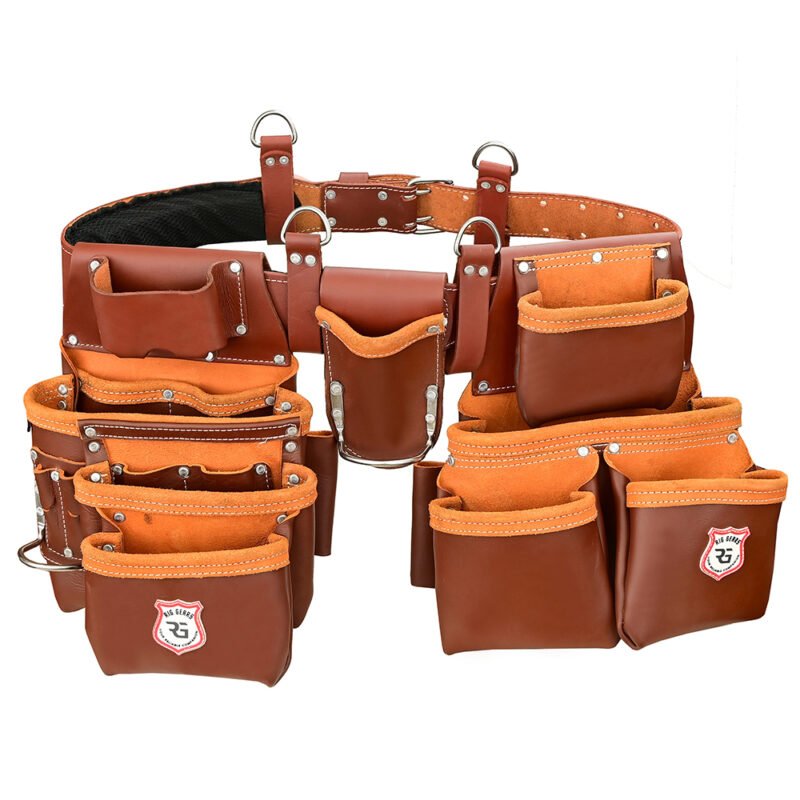
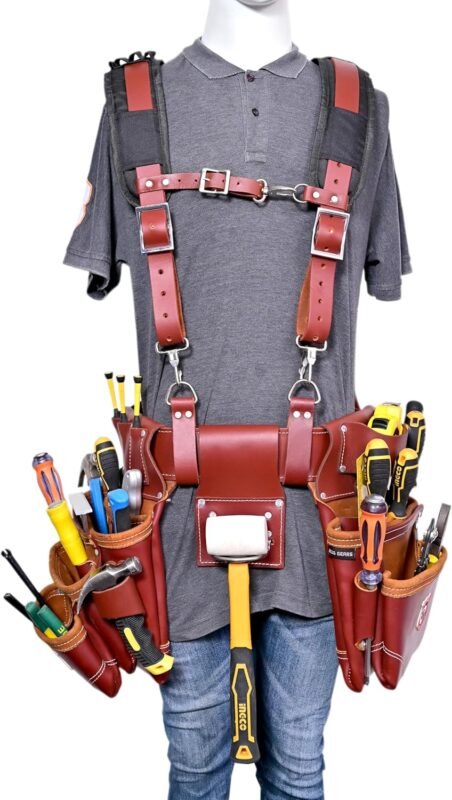
A single tool pouch is one pouch worn on your dominant side, usually paired with a hammer holder or a small pouch on the other hip. It carries your core tools and a modest amount of fasteners. A double tool pouch setup puts a substantial pouch on both sides — typically fasteners and big-capacity storage on one hip, hand tools on the other — roughly doubling your carrying capacity and spreading it across both hips. Some double rigs are two separate pouches on one belt; others are a single double-sided unit.
Capacity and Organisation
This is where double pouches win outright. If your day runs on nails, screws, staples or fittings in more than one size, a double setup gives each its own compartment and still leaves room for tape, square, knife, pencils and bits — everything with its own home, reachable without looking. A single pouch forces choices: what stays in the pouch, what lives in the tool bag, and how many trips you make back to it. For production work where restocking breaks your rhythm, capacity is productivity.
Balance and Body Mechanics
A loaded single pouch hangs all its weight on one hip and tends to pull the belt around, which is why single-pouch users often run lighter loads or add a small off-side pouch to even things out. A double setup balances left against right, so the belt rides level and your hips share the work — especially noticeable with suspenders, where a balanced load hangs straight and doesn’t twist. The trade-off is total weight: a fully loaded double rig is heavier in absolute terms, so it rewards honest packing rather than carrying the whole store.
Mobility: Ladders, Lifts and Tight Spaces
Here’s where single pouches earn their keep. In ceiling grids, crawl spaces, attics, cabinets and scissor lifts, a wide double rig catches on everything and turns side-to-side movement into a squeeze. Single-pouch users can slide through stud bays and turn in a lift basket without unloading. If your trade keeps you in finished spaces or up in the air with your tools staged on a cart or in a bag nearby, the smaller footprint is worth more than the extra pockets.
Trade by Trade
- Framers and general carpenters: double. Fastener volume and tool variety demand it, and the work is mostly open framing.
- Electricians: often single for trim and service work, double for rough-in where fittings and fasteners multiply. Many run a single pouch plus an apron or bag for devices.
- Finish carpenters: single, usually. Fewer, lighter tools, finished surfaces to protect, and lots of movement through tight, completed spaces.
- Roofers and sider crews: double for fastener capacity, balanced for ladder work.
- Handymen and maintenance techs: single. The tool selection changes hourly, and a bag does the heavy lifting.
The Hybrid Option
You don’t have to marry one setup. Many tradespeople run a belt that accepts pouches on either side and configure it per job: double for rough work, pull one pouch off for finish days. A quality leather belt with well-placed loops makes swapping quick. If you go this route, buy the belt and pouches as a system so everything sits at the same height and spacing.
A simple test if you’re still torn: write down everything you actually carried on your last three jobs, not what you might carry someday. If the list fills one pouch with room to spare, go single and enjoy the mobility. If you were restocking from a bag twice a day, the double setup will feel like a promotion.
Still deciding? Compare the layouts side by side in our double tool pouches and single tool pouches, and pick the rig that matches your longest, heaviest day — not your lightest.