Why Full-Grain Leather Outlasts Everything Else


Every tool belt claims to be “genuine leather” or “premium leather,” and those words tell you almost nothing. Leather is graded by which part of the hide ends up in the product, and the grade decides whether your belt breaks in or breaks down. Here’s the honest breakdown — full-grain, top-grain, genuine, bonded and synthetic — and why serious work gear is made from one grade only.
The Hide, From Top to Bottom
A cattle hide is thick. When it’s prepared for products, it can be split into layers. The top layer — the outer surface that faced the weather on the animal — is the tightest, densest and strongest, because its fibres are packed closely together. Deeper layers are progressively looser and weaker. Every leather grade is a statement about which layer you’re getting, and manufacturers are not always quick to clarify. Once you know the map, the marketing gets easy to read.
Full-Grain: The Whole Top Layer, Uncorrected
Full-grain leather is the complete top layer of the hide with nothing sanded, buffed or corrected away. It keeps the natural grain, the tight fibre structure, and all of the hide’s strength. Because the fibres are intact, full-grain resists tearing and abrasion better than any other grade, breathes better, and develops a patina instead of a worn-out look. It starts slightly stiffer and breaks in to the shape of its job and its owner — which is why a full-grain tool belt feels better in year two than it did on day one, and is still working in year ten.
Top-Grain: Sanded, Coated, Weaker
Top-grain leather starts from the same top layer but is sanded to remove natural marks, then given an artificial grain and a surface coating. It looks uniform and feels smooth off the shelf, which is why it dominates furniture and fashion. But sanding cuts into the tight fibres, and the coating is a skin that eventually cracks and peels — especially under the flexing, abrasion and weather a tool belt takes daily. It’s a decent material used in the wrong job when it ends up on work gear.
“Genuine,” Bonded and Split Leather
“Genuine leather” is a grade, not a compliment: it usually means leather from the lower splits, corrected and finished to look like the good stuff. Bonded leather goes further — it’s leather dust and scraps glued together with binders and given a leather-look surface, the particle board of the leather world. Both are real leather in the legal sense and neither belongs on a working rig. They stretch, crack and delaminate under loads and conditions that full-grain shrugs off, often within a single season.
Synthetic: Light, Cheap, Disposable
Synthetic belts (nylon webbing, PVC and faux leather) win on shelf price and initial weight. They lose everywhere else over time: webbing frays and stretches, stitching pulls through soft material, faux leather cracks at flex points, and plastic hardware fatigues. Synthetic rigs are consumables — bought cheap, replaced often. Add up three replacements and the “expensive” full-grain belt was the bargain all along, before you count the day a worn rig dumps your tools off a ladder.
Why Oil-Tanned Full-Grain Suits Work Gear
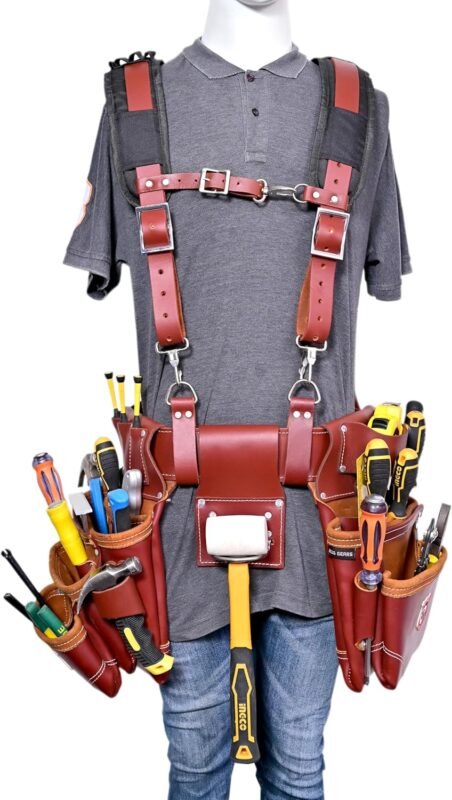
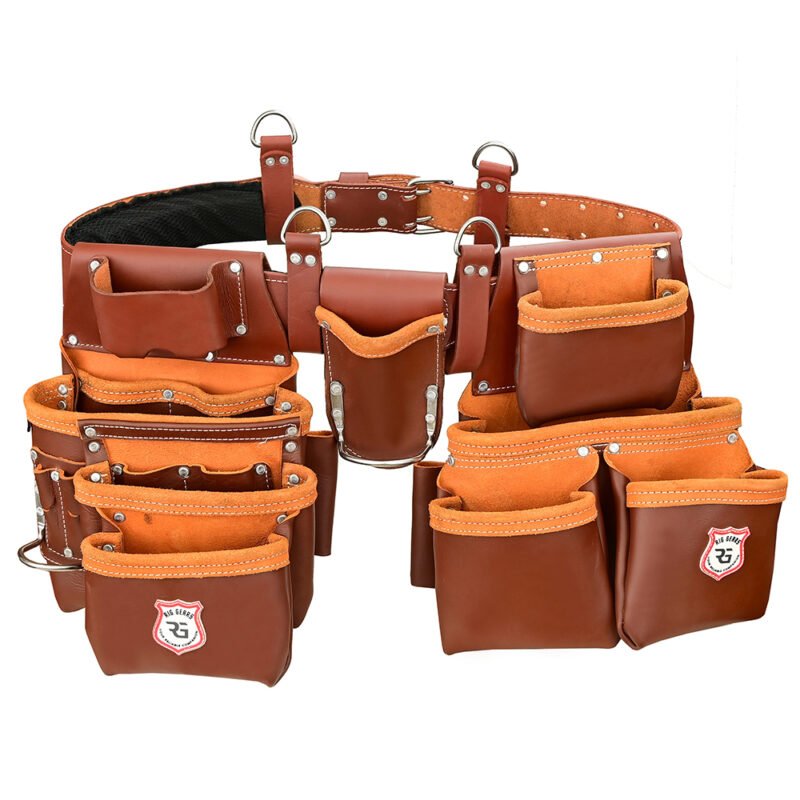
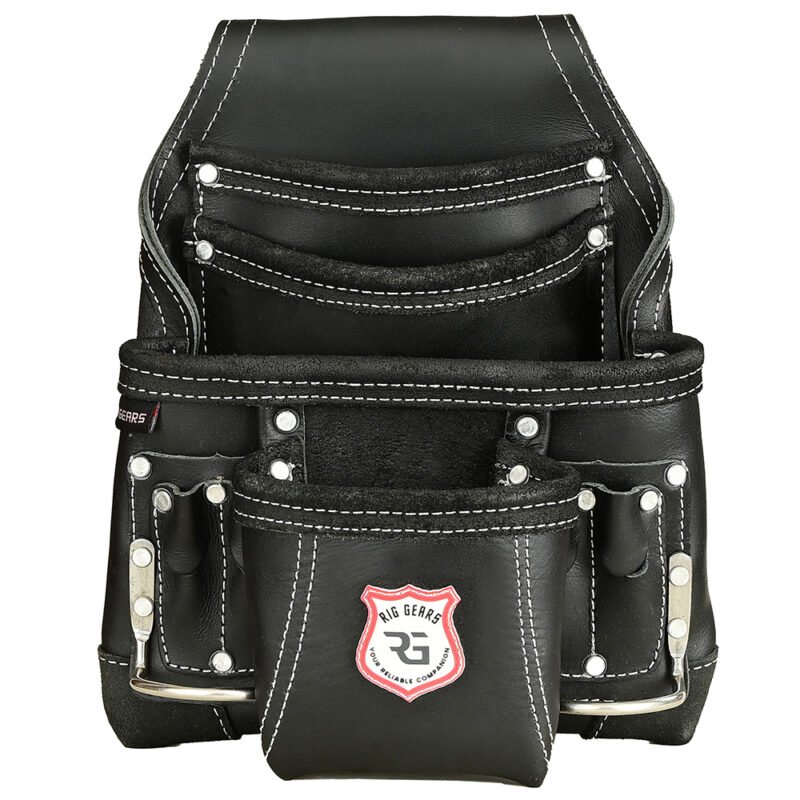
Tanning decides how the leather behaves. Oil-tanned full-grain — the leather we build with — is treated with oils and waxes that keep it supple, add real resistance to water and jobsite grime, and help it flex thousands of times without cracking. It comes in the deep black, brown and maroon finishes that hide a working life gracefully. Combined with the full-grain fibre structure, it’s the toughest practical material for belts and pouches.
Keeping Full-Grain Leather Going
- Brush off dust and grit; wipe down with a barely damp cloth when muddy.
- Let a soaked belt dry slowly at room temperature — never on a heater.
- Condition a few times a year with a leather conditioner to replace worked-out oils.
- Store hanging, out of direct sun, so it keeps its shape.
That’s the whole maintenance burden for a decade of service. If you want gear built from the right layer of the hide, read our story and see the range of leather tool pouches and belts we make from full-grain, oil-tanned leather.