Starting a Carpentry or Contracting Business: The Essential Gear Checklist

Starting your own carpentry or contracting business is exciting right up until you price out the gear. Tools, safety equipment, a reliable way to carry it all — the list grows fast, and every dollar has to count in year one. This checklist focuses on the essentials that actually earn money on a job site, in the order most new owners buy them, plus how to think about gear when you grow from working solo to running a small crew.
1. The Hand Tool Core
Every carpentry kit starts here, and quality matters more than quantity: framing hammer and finish hammer, tape measures (buy two — one will walk away), speed square and combination square, chalk line, utility knives and blades, chisels, pry bars, levels in at least two lengths, a good hand saw, nail sets, and a layout kit of pencils, markers and a laser measure when the budget allows. Buy the best you can afford in the tools your hand touches all day; save money on the tools that come out twice a month.
2. Power Tools That Pay for Themselves
A circular saw, a drill and impact driver set, and a reciprocating saw will cover the majority of rough and finish work. Add an oscillating multi-tool — the problem-solver you will reach for constantly — and a miter saw when trim work becomes regular. Pick one battery platform and stay on it; a young business cannot afford three charger ecosystems. Keep blades and bits fresh: dull blades slow crews down and burn out tools, and they cost more in labor than they ever save.
3. Safety and PPE — Non-Negotiable
Safety glasses, hearing protection, work gloves, dust masks or respirators for demo and insulation work, knee pads, and a first aid kit that actually gets restocked. If you employ anyone, PPE stops being a personal choice and becomes your legal and moral responsibility. Budget for it from day one, and replace worn gear without argument — a crew that sees you cheap out on safety learns to cheap out on everything.
4. Carry Gear: The Belt System You Live In
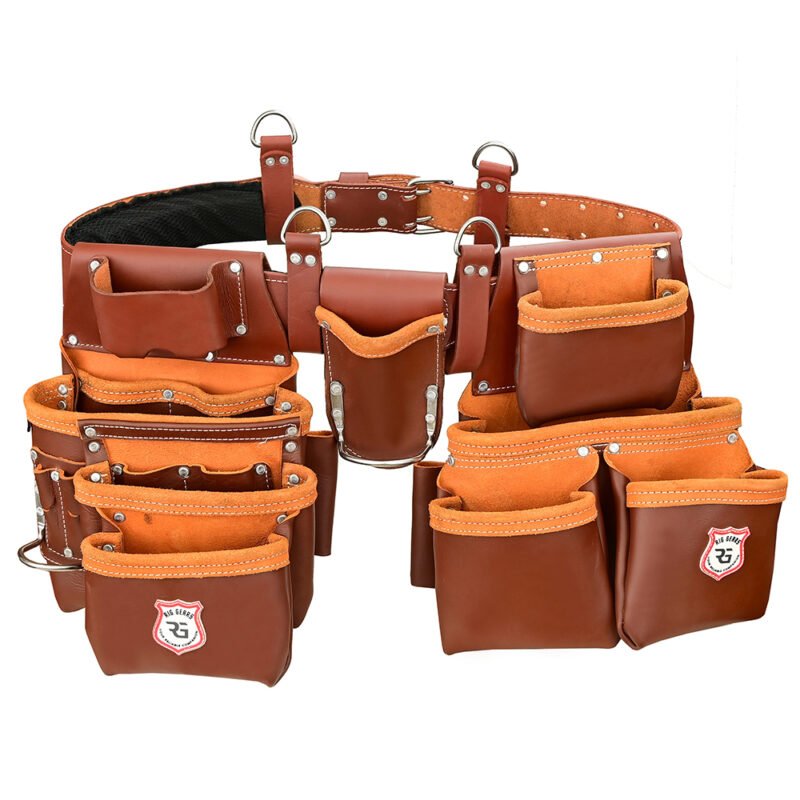
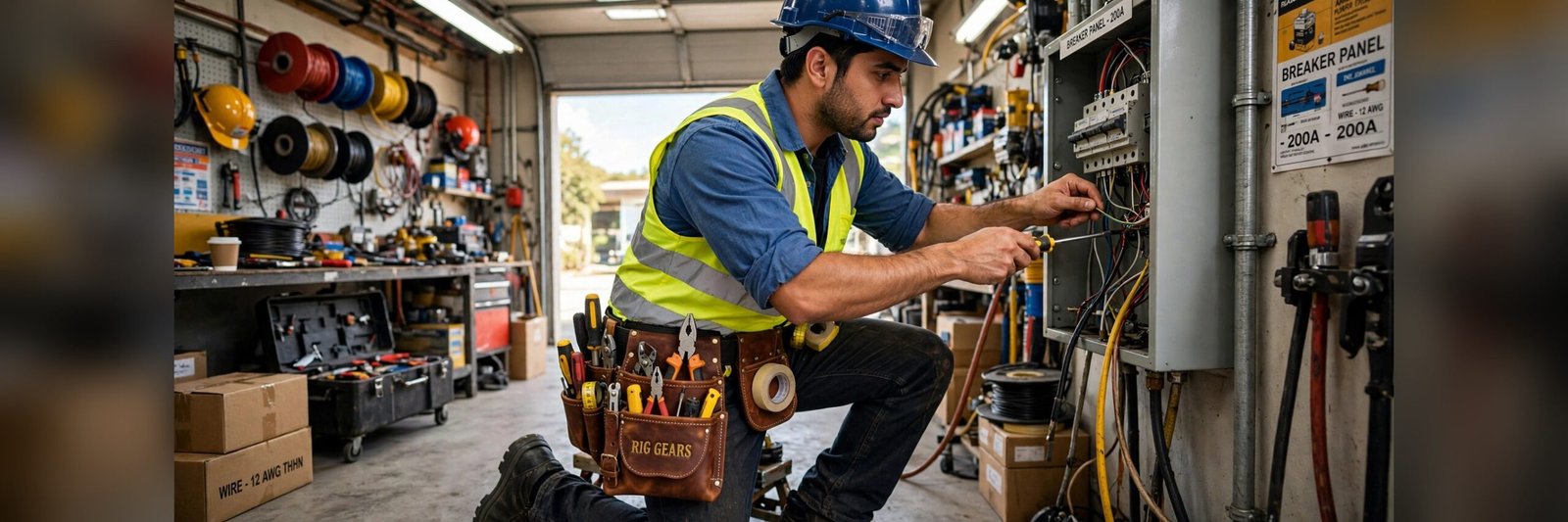
Your tool belt is not an accessory; it is your mobile workstation, worn eight to ten hours a day. New owners often grab the cheapest belt on the shelf and pay for it in back pain and torn pouches within the year. A handmade full-grain leather tool belt with the right pouches breaks in to your body, survives daily abuse, and keeps every tool in its place. Match the pouch setup to your work: a double tool pouch for framing and general carpentry, a lighter single pouch for finish days. Add suspenders if your loaded rig is heavy — your spine is also business equipment.
5. Outfitting a Small Crew
The day you hire your second and third pair of hands, gear becomes a system. Standardizing belts and pouches across the crew pays off in ways that are easy to miss:
- Faster work: everyone knows where shared tools and fasteners ride, and anyone can grab what they need off any belt.
- A professional image: a crew in matching, quality leather rigs looks established to clients and general contractors — before you have said a word.
- Smarter replacement: one supplier, one style, easy swaps when a pouch wears or a new hire starts.
For crew orders, talk to us before you buy one at a time. Rig Gears handles custom and wholesale enquiries directly — reach out through the contact page or at info@riggears.com and tell us how many people you are outfitting.
Start Lean, Buy Right
The pattern that works: buy the essentials once, at working quality, and add specialty tools as jobs demand them. Your belt and pouches are daily-wear gear, so they belong in the “buy right” column from the start. Browse the shop for individual rigs — orders over $250 ship free — and when you are ready to kit out the whole crew, get in touch about wholesale options.