Oil-Tanned Leather Explained: Why It Is the Working Leather


Pick up two leather tool belts and they can feel like completely different materials — one stiff and papery, the other rich, flexible and slightly waxy, bending easily in your hands. That second one is almost certainly oil-tanned leather, and it is no accident that it is the leather serious working gear is made from. Here is what oil-tanned actually means, why it behaves the way it does on a job site, and how it compares with the other leathers you will run into.
What “Oil-Tanned” Actually Means
All leather starts as a hide that must be tanned — treated so it will not rot or harden. Oil-tanned leather is finished by working oils and waxes deep into the hide after tanning. Those oils do not just sit on the surface; they saturate the fibers themselves. The result is a leather that is naturally supple instead of boardy, with a distinctive pull-up character: bend or stretch it and the oils shift, lightening the color at the crease, then gradually settle back. It is the same family of leather long used for work boots, for exactly the same reasons it suits tool belts.
Built for Weather and Wet Days
Construction does not stop for drizzle, wet lumber or a muddy morning. The oils packed into oil-tanned leather make it naturally water-resistant — moisture beads and sheds instead of soaking straight through, and when the leather does get wet, it dries without the stiffness and cracking that ruin lesser hides. That matters for a tool belt: your rig gets rained on, set down on wet concrete, and dragged through crawl spaces. Leather that tolerates all of that — and comes back flexible — saves you from replacing gear that the weather killed.
Break-In and Comfort
A stiff new belt fights you for the first month. Oil-tanned leather starts flexible and breaks in fast, molding to your hips and to the shape of your pouches’ load. Because the fibers are lubricated by the oils, the leather flexes thousands of times a day — every bend, kneel and climb — without the surface cracking that shows up on dry, cheap leather. Pouches stay easy to reach into, too: the mouth of an oil-tanned pouch keeps its shape without going rigid, so tools slide in and out instead of catching.
The Self-Healing Character
Scratch oil-tanned leather — and on a job site, you will, daily — and something useful happens: rub the mark with your thumb and it often fades or disappears. The friction warms and moves the oils, which flow back over the scratch and blend it in. Over months and years, this builds the deep, varied patina that makes an old oil-tanned belt look better than a new one. Your belt ends up carrying a record of the work — scuffs from framing, darkening from sweat and sun — without looking destroyed. It is character you cannot fake and do not have to baby.
Oil-Tanned vs. Other Leathers
- Vegetable-tanned leather: firm, traditional and excellent for belts that need to hold a crisp shape, but stiffer out of the box and less forgiving of water.
- Chrome-tanned leather: soft and cheap to produce, common in gloves and upholstery, but thinner hides and softer temper usually mean a shorter life under tool weight.
- Split and corrected leathers: made from the weaker lower layers of the hide or heavily resurfaced — this is where bargain belts come from, and where their short lifespans come from too.
- Oil-tanned full-grain: the top, strongest layer of the hide, saturated with oils — the combination that working gear wants.
Simple Care for Oil-Tanned Gear
Care is minimal: brush off dirt, wipe with a damp cloth when needed, and let it dry naturally away from direct heat. A light conditioning now and then keeps the oils topped up, especially if your belt lives in a hot truck. That is the whole routine — the leather was designed by its tanning to be low-maintenance.
Feel the Difference Yourself
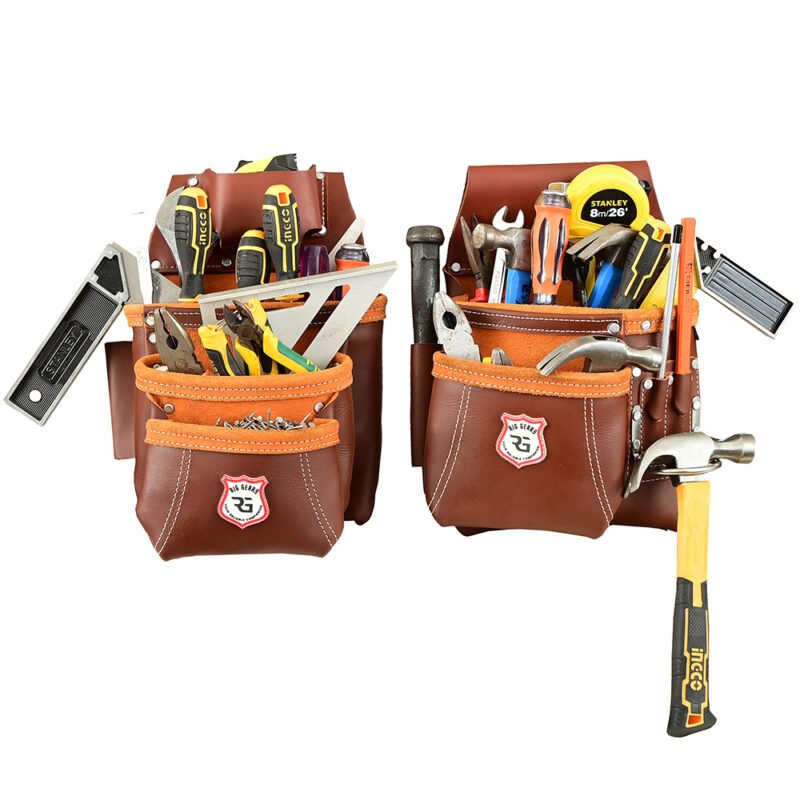
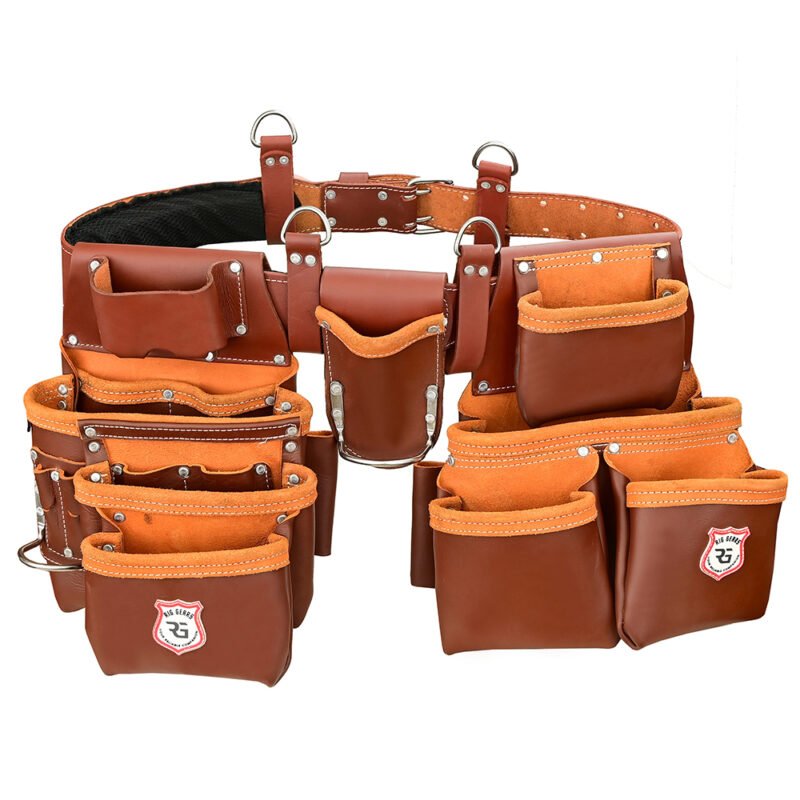
Every Rig Gears belt and pouch is handmade from full-grain, oil-tanned leather in black, brown and maroon — including our 10-pocket leather tool pouch and the rest of the tool pouch range. If your current belt is stiff, cracking or soaking through, browse the shop and upgrade to the leather that was made for the work.