
How to Care for a Full-Grain Leather Tool Belt (Cleaning, Conditioning, Storage)

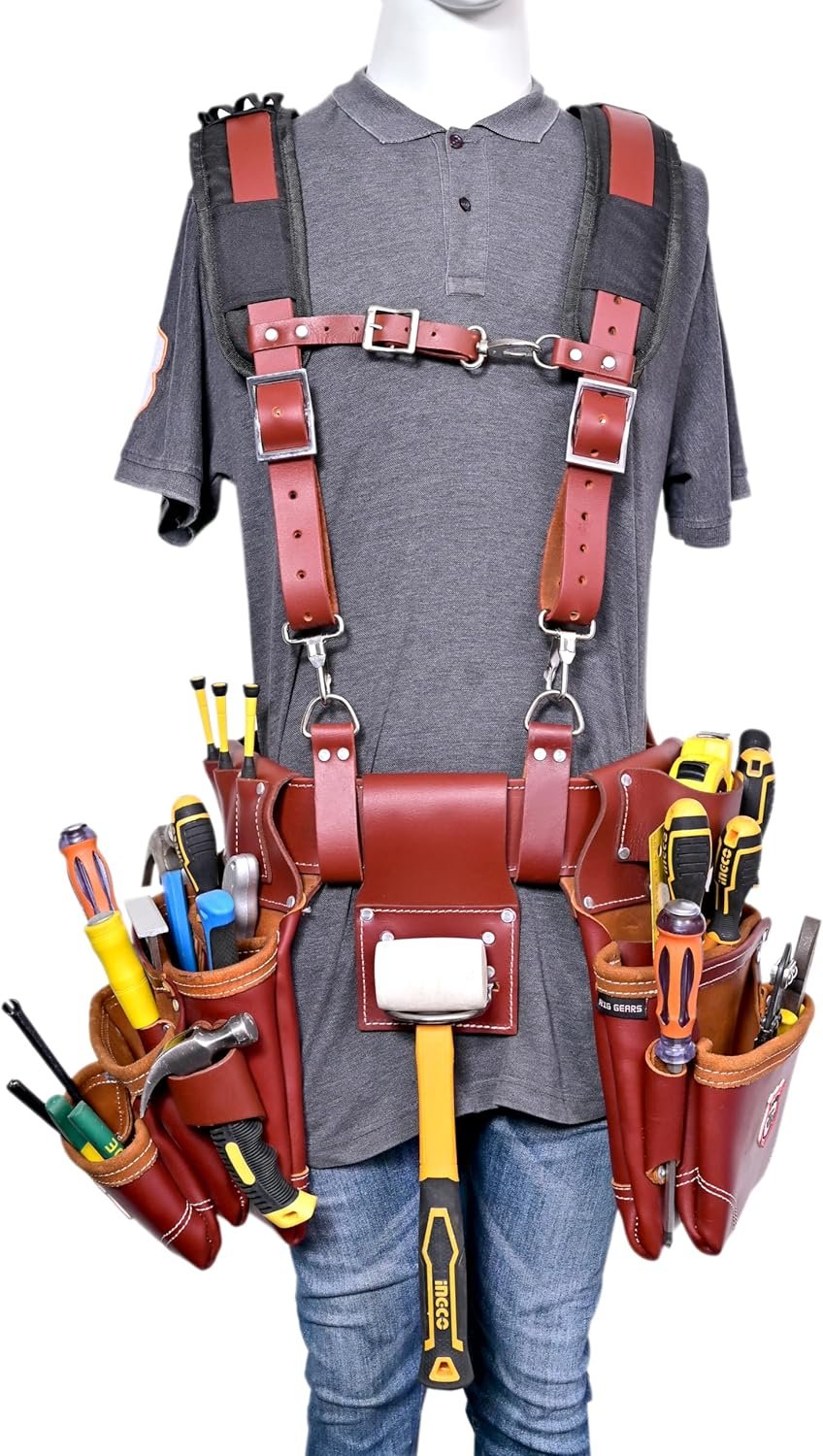
A full-grain leather tool belt is one of the few things on a job site that can genuinely last a decade — but only if you give it a small amount of care. The good news: leather care is simple, cheap, and takes minutes. Fifteen minutes a few times a year is all that stands between a belt that cracks and stiffens, and one that keeps getting more comfortable every season. Here is the complete routine.
Know Your Leather: Why Full-Grain Responds to Care
Full-grain leather is the top, densest layer of the hide, and oil-tanned leather has oils worked deep into its fibers during tanning. Those oils keep it flexible and water-resistant. Over months of sun, dust, sweat, and rain, they gradually dry out — and conditioning simply replaces them. That is the entire science of leather care: keep the fibers fed, and the leather stays strong and supple. (Bonded or coated leathers do not absorb conditioner or reward care the way genuine full-grain leather does.)
Step 1: Cleaning — After Rough Jobs and Monthly
- Empty everything. Tip out the nails, screws, dust, and metal shavings hiding in the pockets. Debris left in pockets grinds against the leather from the inside.
- Brush it down. A stiff brush removes dried mud, concrete dust, and sawdust from the surface and stitching.
- Wipe with a damp cloth. Use a cloth dampened with plain water for general grime. For heavier dirt, use a small amount of saddle soap or a leather-safe cleaner, worked in with the cloth.
- Rinse the soap, not the belt. Wipe again with a clean damp cloth to lift residue. Never soak a leather belt, dunk it, or pressure-wash it — excess water is leather’s enemy.
- Clean the hardware too. Wipe buckles, rings, and rivets while you are at it.
Step 2: Drying — The Step Everyone Gets Wrong
If your belt gets soaked, how you dry it matters more than the soaking. Hang it at room temperature, away from direct heat, and let it dry slowly and naturally. Never use a heat gun, radiator, or dryer: forced heat cooks the oils out of the leather and causes exactly the cracking people blame on “bad leather.” Stuffing pouches loosely with newspaper helps them hold shape while drying. Once dry, condition — wet-then-dried leather needs its oils replaced.
Step 3: Conditioning — A Few Times a Year
- When: every three to four months for a belt worn daily, and any time the leather looks pale or feels stiff. Dry climates and winter work call for the shorter interval.
- What: a quality leather conditioner or balm made for work leather and oil-tanned hides. Avoid heavy petroleum products and anything silicone-based, which can clog the pores.
- How: apply a thin layer with a soft cloth, working it into the belt, pouches, and stitching lines. A little goes a long way — you are feeding the leather, not greasing it. Let it absorb for 15–30 minutes, then buff off the excess with a clean cloth.
- Color note: conditioners can slightly darken leather, especially the first time. That deeper tone — the start of a real patina — is normal on oil-tanned leather, and most owners prefer it.
Step 4: Storage — Where It Rests Matters
Hang your belt by its buckle or lay it flat in a dry, ventilated spot — a hook in the shop or garage is ideal. Avoid sealed plastic bins (trapped moisture invites mold), damp basements, and long stretches in a hot vehicle. If you rotate belts, condition the stored one lightly before it goes away and after it comes back.
Troubleshooting Common Problems
Mold or mildew spots
Brush off what you can outdoors, wipe with a cloth dampened with a half-and-half mix of water and white vinegar, let it dry fully in fresh air, then condition. Store it somewhere drier afterward.
Salt lines and white residue (winter work)
Wipe down with a damp cloth, dry naturally, and condition. Road salt and concrete dust are both drying agents — winter belts earn an extra conditioning.
Stiff belt after a soaking
It dried too fast or went unconditioned. Clean it, let it rest a day, then condition and flex the leather gently by hand as the conditioner absorbs. Suppleness usually returns.
Loose stitching or a popped rivet
Stop loading that pocket and get it repaired promptly — small stitching repairs are quick, and catching them early protects the surrounding leather. Quality belts are worth repairing; that is the point of buying one.
The Two-Minute Habit That Does Most of the Work
You do not need the full routine every week. The habit that delivers most of the benefit is the simplest: at the end of the day, shake out the pockets, give the belt a quick brush or wipe, and hang it up instead of dropping it in a pile. Add the clean-and-condition routine a few times a year, and a full-grain belt or pouch from our leather tool belt range will break in beautifully instead of wearing out.
Gear That Is Built to Be Kept
We build Rig Gears belts and pouches from full-grain, oil-tanned leather so a little care goes a very long way. If your current rig is past saving, browse the shop for a replacement — orders above $250 ship free. More on how our gear is made: our about page.