Leather vs Nylon Tool Belts: An Honest Durability Comparison


Ask a crew which belt material is better and you will start an argument. Nylon fans point to light weight and low price. Leather loyalists point to the belt they have worn for a decade. Both sides have a point, so instead of slogans, here is an honest, category-by-category comparison of leather vs nylon tool belts — including where nylon genuinely wins — so you can decide based on how you work.
Durability: Where the Argument Is Won and Lost
A tool belt lives a hard life. It is dragged across concrete, snagged on rebar and nail heads, soaked, frozen, and loaded with sharp metal. Under that treatment:
- Full-grain leather resists punctures and abrasion exceptionally well. Surface scratches blend in, small cuts do not run, and the material actually becomes more supple with use. A quality leather belt’s service life is measured in years — often a decade or more with basic care.
- Nylon (usually Cordura-style woven fabric) starts strong, but woven fibers fray at edges and stitch holes, straps stretch and glaze with friction, and once a tear starts it tends to keep going. Most nylon rigs on full-time jobs are replaced within one to three years.
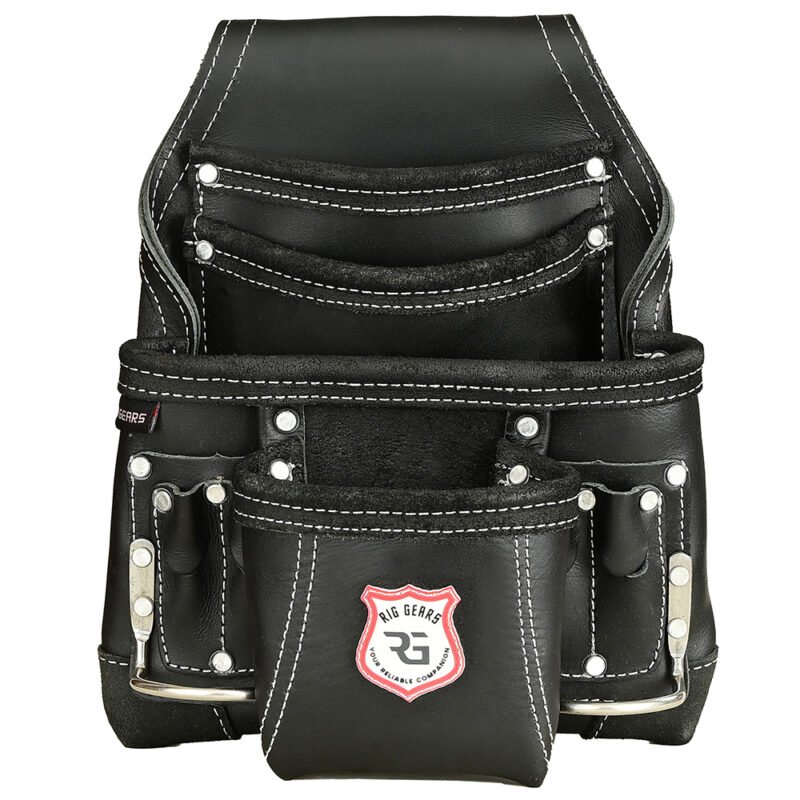
The honest caveat: cheap leather is not durable leather. Bonded or split leather belts can fail faster than good nylon. The comparison only favors leather when it is genuine full-grain — which is why every Rig Gears belt and pouch uses full-grain, oil-tanned hides. See the difference in our leather tool belt range.
Weather and Jobsite Conditions
Oil-tanned leather is treated with oils during tanning, which makes it naturally resistant to water: it sheds rain, tolerates wet conditions, and dries without going stiff or cracking when it is cared for reasonably. It also handles cold without becoming brittle plastic-like, and it does not melt or shrink near heat.
Nylon shrugs off a soaking too, and dries faster — a genuine point in its favor for anyone working in constant rain who never wants to think about conditioning. But nylon degrades under UV over time, and soaked nylon straps stretch, so a wet nylon rig rides lower and looser than it did in the morning.
Weight and Comfort
Nylon wins the first hour. A nylon rig is noticeably lighter empty, and for occasional users or very light tool loads, that matters. But comfort over a ten-hour day is about load distribution and fit, not empty weight. Leather belts are wider and stiffer, spreading weight across the hips, and leather molds to your body — after a break-in period, a leather belt fits like it was made for you, because in effect it becomes shaped to you. Nylon stays the same floppy shape forever, and its narrower straps concentrate pressure.
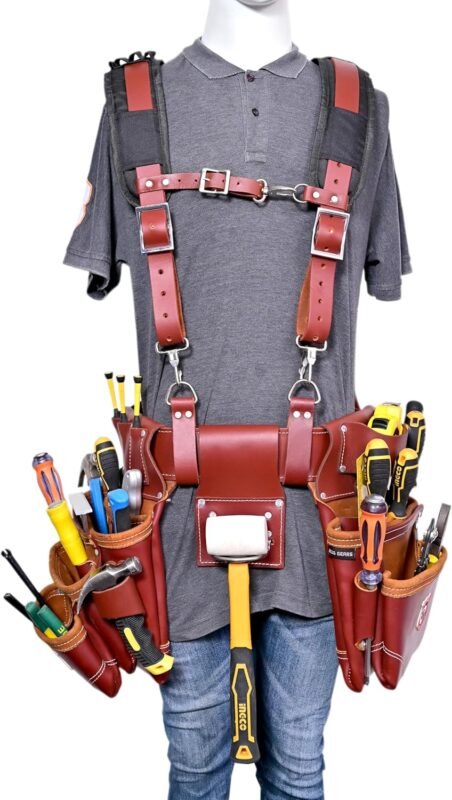
Verdict: light loads and occasional use, nylon is fine. Heavy daily loads, leather carries better — especially with suspenders on a setup like our 22-pocket double pouch.
Structure and Tool Access
Leather pockets hold their shape. Slots stay open, so tools drop in and pull out one-handed without looking. Nylon pockets collapse flat when empty, which means fishing for bits and drivers at the bottom of a limp pouch. If you reach for tools hundreds of times a day, this is the difference you feel most.
Maintenance: The Trade-Off
Nylon asks almost nothing: hose it off, hang it up. Leather asks a little: brush off the dust, wipe it down, and condition it a few times a year — fifteen minutes of care that returns years of service. Neither is a burden; leather’s small routine is simply the price of its much longer life.
Cost Per Year: The Math That Settles It
Compare cost per year of service instead of sticker price. A budget nylon rig replaced every year or two, across a ten-year career, adds up to several purchases — each with a break-in period and a mid-job failure risk. One full-grain leather belt bought once, maintained lightly, and worn for the same decade comes out ahead on cost, and it spends zero days in a dumpster. This is also why crews and companies increasingly standardize on leather for bulk orders: the replacement cycle disappears.
So, Which Should You Buy?
- Choose nylon if: you use a belt a few times a month, carry a very light load, or need the cheapest possible backup rig.
- Choose leather if: you wear a belt daily, carry a real load, work outdoors, or are tired of replacing gear. Full-grain, oil-tanned leather is the professional’s long-term answer.
See What Full-Grain Leather Feels Like
The difference between the two materials is easiest to judge with a belt in your hands. Browse our leather tool pouches and belts in the shop, learn how we got started on our about page, and remember orders above $250 ship free. Once a leather rig breaks in to your body and your tool list, going back to nylon feels like a downgrade — because by then, it is.