Framer’s Tool Belts: Built for Speed, Framing and Heavy Loads


Framing is a race against the schedule, and your tool belt is either helping you win it or slowing you down. A framer’s rig has to carry a full load — framing hammer, speed square, tape, chalk line, utility knife, pencils, and a serious supply of nails and screws — while you climb, crouch, reach overhead and walk plates. A belt built for light finish work will sag, twist and wear out fast under that kind of load. Here’s what separates a real framer’s tool belt from the rest.
Start With the Load, Not the Looks
Before you shop, lay out everything you actually carry on a normal framing day and weigh it. Most framers are surprised to find they’re hauling 15 to 25 pounds before lunch. That number decides everything else: belt width, padding, pouch size and whether you need suspenders. A rig that feels fine empty in the store can become a hip-digger by the second wall. Choose a belt rated for the load you carry at 4 p.m., not the one you carry at 7 a.m.
Belt Width and Padding Matter More Than You Think
A narrow belt concentrates all that weight on a thin line across your hips. For framing loads, look for a wide work belt — ideally a padded one — that spreads pressure over a larger area and stays put when you bend and twist. Padding also keeps the belt from rolling over under a heavy pouch. If you run a non-padded belt, it should be thick, full-grain leather that won’t stretch out of shape; thin belts deform, and a deformed belt never rides right again.
Pouch Layout: Speed Comes From Repetition
On a framing crew, speed is repetition. Your hammer, tape and square should land in the same pocket every single time, reachable without looking. A practical framing setup includes:
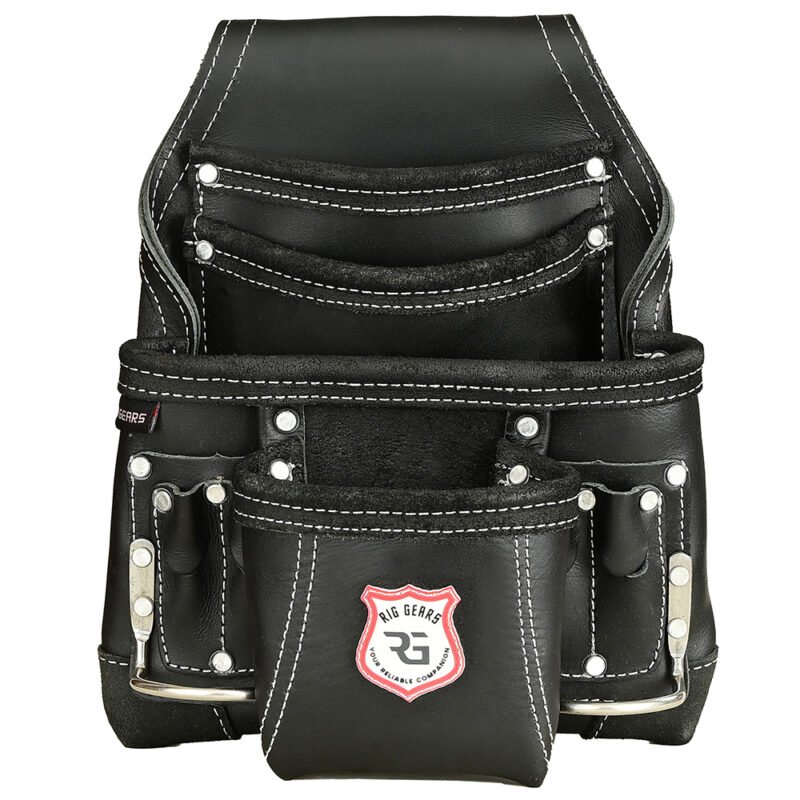
- A large main pouch on your dominant side for fasteners, with a wide mouth so a gloved hand can grab nails fast.
- A dedicated hammer holder that keeps the handle angled for a clean draw — no fishing around.
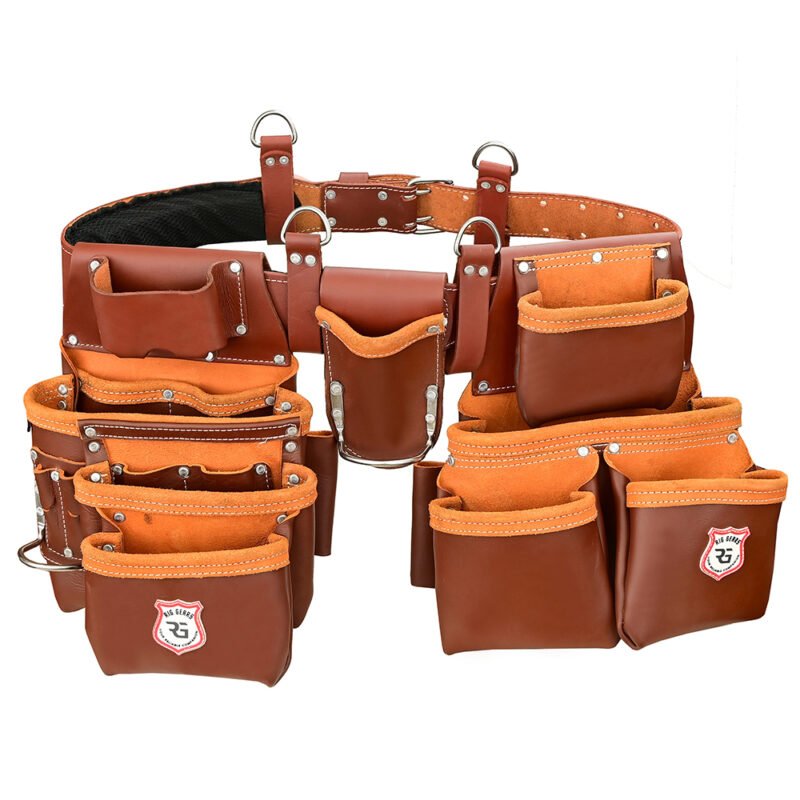
- A second pouch on the off side for your tape, square, chalk line and knife, balanced against the fastener load.
- Small pockets and slots for pencils, bits and a utility knife so they don’t disappear into the nail pouch.
Double-sided pouch setups are popular with framers for exactly this reason: fasteners on one hip, tools on the other, nothing stacked on top of anything else. You can browse layouts in our double tool pouch range to see how the pockets are arranged.
When the Load Gets Heavy, Add Suspenders
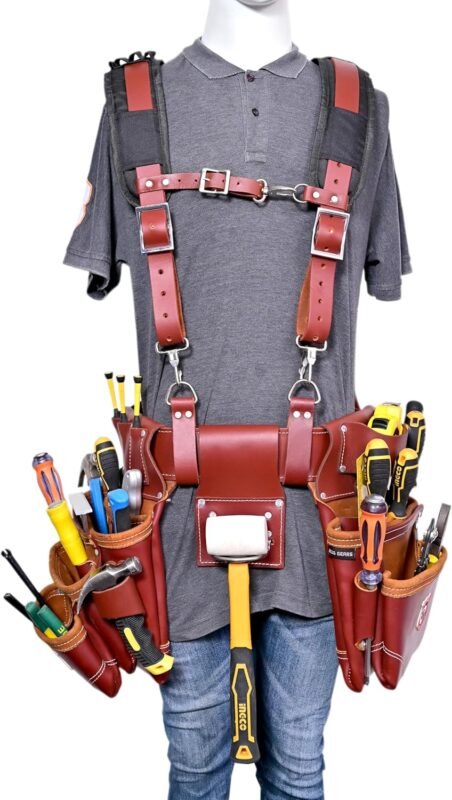
There’s a point where no belt, however wide, can carry a full framing load comfortably — and that’s where suspenders earn their keep. Suspenders move a share of the weight from your hips to your shoulders, stop the belt sliding down when pouches are full, and keep the rig stable while you climb. If you end the day with sore hips or you keep hitching your belt up between tasks, suspenders aren’t an accessory; they’re the fix. Many framers run them all winter over layers and all summer for the support.
Leather That Survives the Jobsite
Framing is rough on gear: lumber rubs, concrete scrapes, rain soaks and sawdust grinds into everything. Full-grain, oil-tanned leather handles this better than any synthetic because the fibre structure is intact — it resists tearing, shrugs off abrasion, and actually gets more comfortable as it breaks in to your body. Oil tanning adds water resistance and keeps the leather supple instead of cracking. A well-made leather rig should last for years of daily framing, not a single season.
Quick Framer’s Rig Checklist
- Belt wide enough (and padded, if your load is heavy) to spread weight
- Pouches laid out so every tool has one home, reachable blind
- Hammer holder positioned for a fast, clean draw
- Suspenders if you’re carrying 15+ lb or working overhead and on ladders
- Full-grain leather and solid metal hardware — no plastic buckles on a framing rig
If you’re building or upgrading your framing setup, start with our leather tool belts and pair one with a high-capacity pouch like the 22-pocket double-side pouch. Carry it all, carry it comfortably, and keep your hands moving.