Tool Belt Suspenders: Save Your Back and Hips on Long Shifts


If you wear a loaded tool belt for eight to ten hours a day, your hips and lower back keep the receipts. The soreness that creeps in by mid-afternoon, the belt that keeps sliding down when your pouches are full, the habit of resting the rig on one hip — those are all load problems, and suspenders are the simplest fix in the trade. Here’s how they help, how to set them up, and how to tell if your rig needs them.
Why a Belt Alone Struggles With Heavy Loads
A tool belt hangs its entire load from one place: your hips. Fifteen to twenty-five pounds of tools and fasteners pulling down all day compresses the hip bones, drags on the lower back, and forces you to over-tighten the belt just to keep it in place — which trades one ache for another. As pouches fill with nails and screws through the day, the balance shifts and the belt starts to twist and sag. None of this is a fitness problem. It’s a physics problem.
How Suspenders Change the Equation
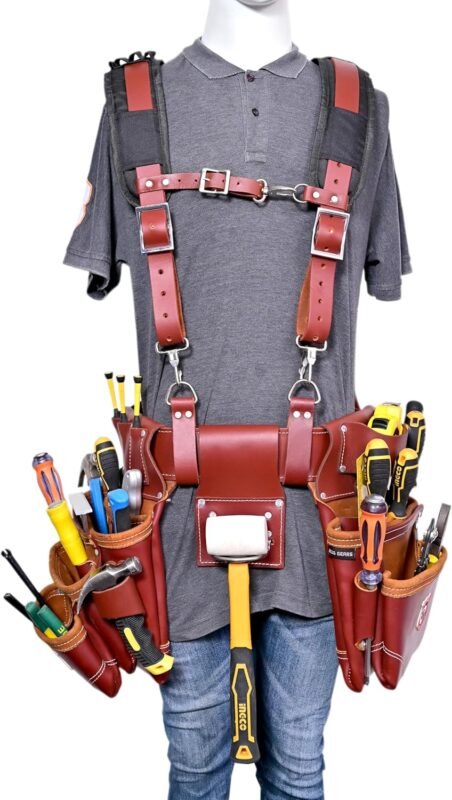
Suspenders attach to your belt at three or four points and transfer a meaningful share of the load to your shoulders, where your body is built to carry weight — the same reason a backpack beats a messenger bag on a long hike. The practical results:
- Less hip pressure. The belt can sit at a comfortable tension instead of being cinched tight.
- No more hitching. The rig stays at the height you set it, even with full pouches, on ladders and overhead work.
- Better posture. With weight shared between shoulders and hips, you stand straighter and your lower back works less.
- Stability. Pouches stop swinging and twisting when you crouch, climb or carry lumber.
Padded vs Non-Padded Suspenders
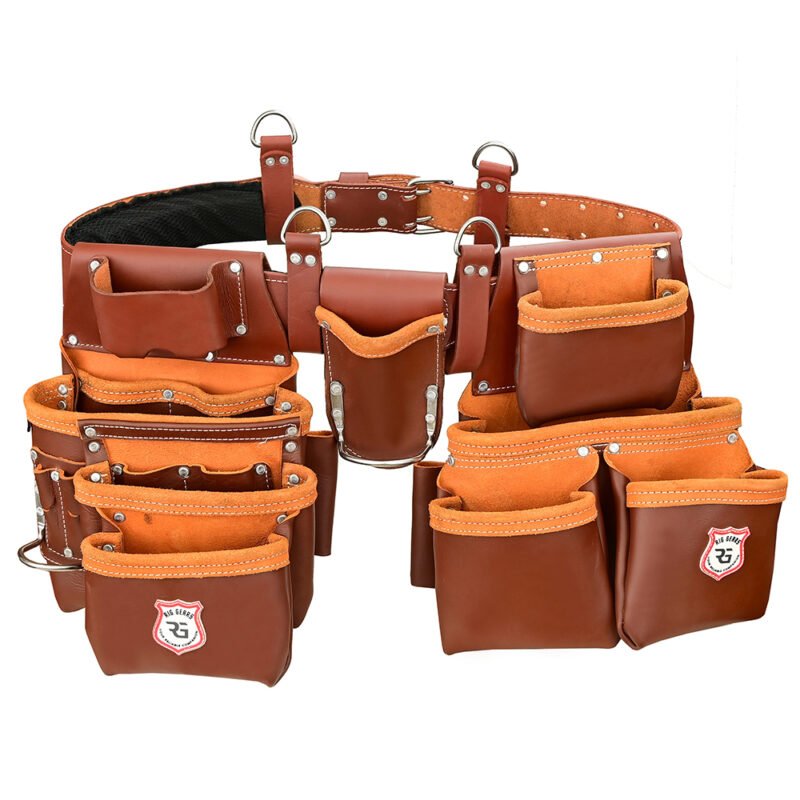
Suspender choice comes down to load and personal preference. Padded suspenders spread shoulder pressure over a wider area and are the better pick for heavy framing and construction rigs worn all day, every day. Non-padded leather suspenders are lighter, simpler and still take plenty of weight off your hips — a good match for moderate loads or for guys who can’t stand bulk over their shoulders in hot weather. Either way, look for full-grain leather straps with solid metal clips or loops; the attachment points take real strain, and cheap hardware is where suspender setups fail first.
Fitting Suspenders Correctly
Suspenders only help if they’re adjusted right. Set your belt at the height you actually work in, with pouches loaded. Attach the suspenders, then adjust the straps so they carry weight without pulling the belt up into your ribs — the belt should stay on your hips, with the straps taking the downward pull, not lifting the rig. Straps should lie flat, not twisted, and the cross or join should sit between your shoulder blades where it won’t fight your movements. Walk, crouch and reach overhead; if a strap digs or slips off a shoulder, shorten that side slightly and test again. Five minutes of adjustment on day one saves a season of annoyance.
Signs Your Rig Is Asking for Suspenders
- Your hips or lower back are sore before the shift ends
- You re-tighten or hitch up your belt several times a day
- Your loaded rig weighs more than about 15 pounds
- You work ladders, scaffolding or overhead where a sliding belt is a hazard
- Your belt has stretched or started to roll under the load
Any two of those, and suspenders will pay for themselves in comfort within the first week.
Looking After Leather Suspenders
Full-grain leather suspenders need little: keep them dry when you can, let them air out after wet days, and work in a leather conditioner a few times a year so the straps stay supple and don’t crack at the adjustment holes. Store the rig hanging rather than folded so straps keep their shape.
Ready to take the weight off your hips? Look at a leather tool belt with suspenders or browse the full shop to build a rig your back will thank you for.