How Pros Organize Their Tool Belts: Setup Ideas by Trade

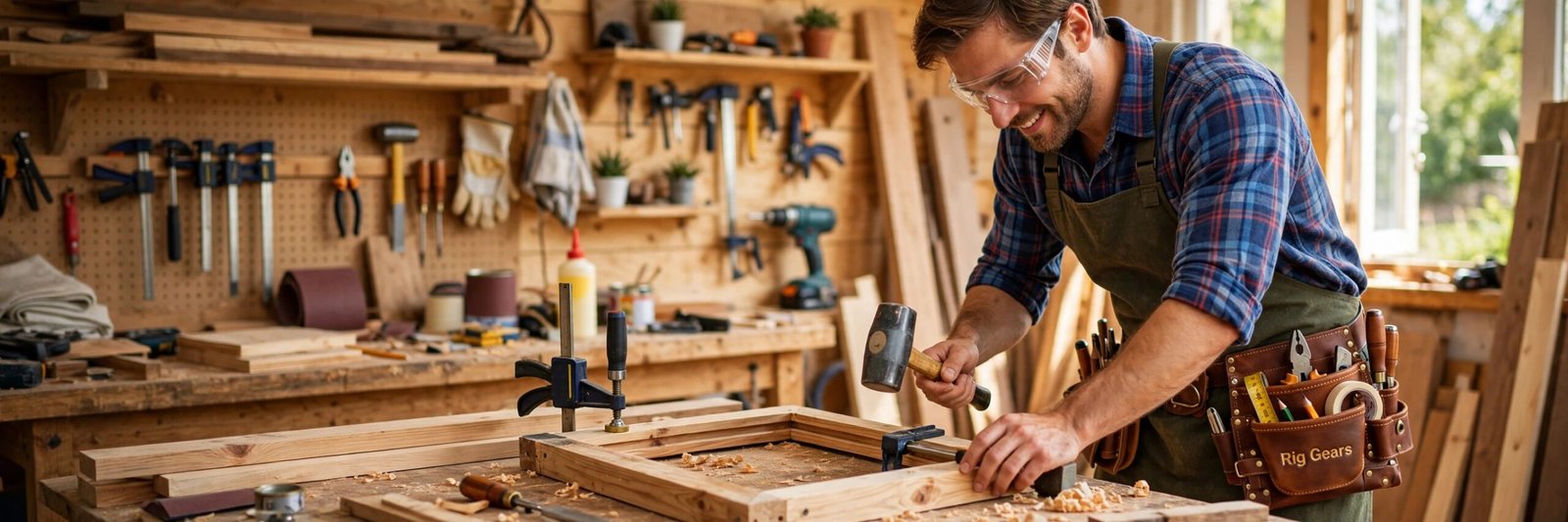
Ask ten tradesmen how to load a tool belt and you will get ten different answers — but watch the fast ones work and you will see the same logic underneath. A good setup is not about carrying everything you own. It is about carrying exactly what the task needs, in the same place every time, so your hands find tools without your eyes leaving the work. Here is how experienced carpenters, electricians and framers organize their rigs, and the rules they all follow.
The Rules Every Pro Follows
Before the trade-specific layouts, four principles show up on almost every well-run belt:
- Dominant hand, dominant side. The tools you grab most — tape, hammer, drivers — live on your strong side. Your off hand holds material, fasteners and the tape’s other end.
- Heavy tools ride low and close. Weight carried high or far from the hips swings, snags and tires your back. Keep the load tight to your body.
- Fasteners get their own pocket. Nails and screws mixed in with tools slow you down and tear up your knuckles. One dedicated fastener pocket per size you are running.
- Same place, every day. Consistency builds muscle memory. Rearranging your pouches every week means fumbling on every grab.
The Carpenter’s Layout
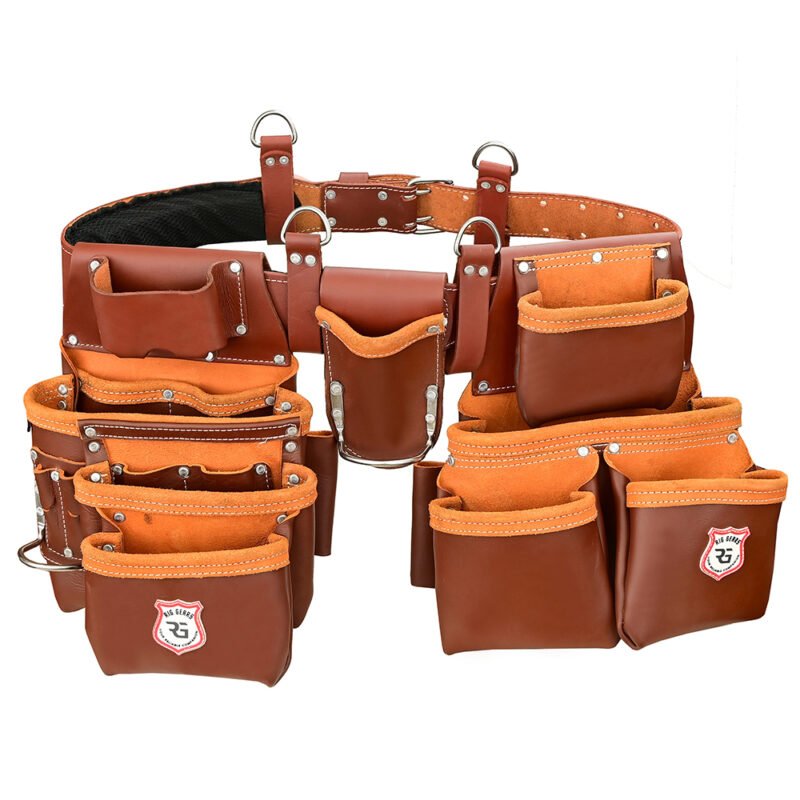
Finish and trim carpenters do a lot of measuring, marking and fitting, so their belts are built around the tape and the pencil. A typical setup puts the tape measure front and center or on the dominant hip where it can be pulled with one hand. A double tool pouch handles the rest: one side for a combination square, utility knife, chisel and nail sets; the other for a fastener mix, a block plane on lighter days, and a chalk line. The hammer rides at the back or in a dedicated loop so it never bangs against door jambs and finished trim. Many carpenters run a lighter rig indoors — a single pouch and a belt — and save the full double-pouch setup for rough work and exterior days.
The Electrician’s Layout
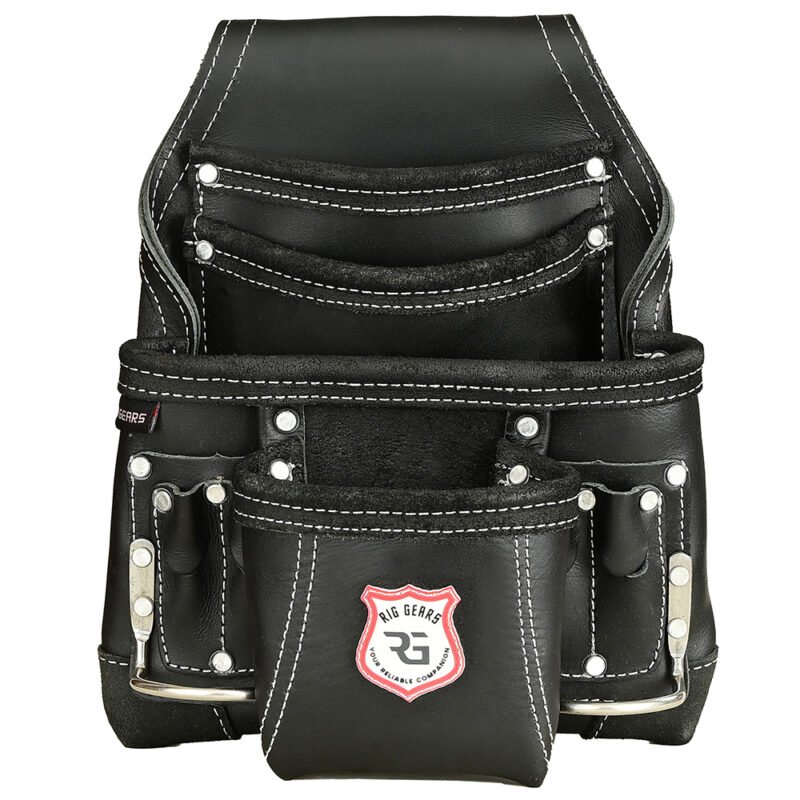
Electricians carry more individual tools than almost anyone: linesman pliers, needle-nose pliers, several screwdrivers and nut drivers, strippers, a meter, tape and fish sticks on big days. The key is a pouch with many narrow slots rather than two big bags, so each driver and plier has its own slot and nothing nests together. A single tool pouch on the dominant side holds the core hand tools, while the off side carries a small fastener pouch for wire nuts, staples, screws and tape rolls. Electricians who spend the day on ladders swear by keeping the belt snug and balanced — an unbalanced load that feels fine on the ground becomes a fight at the top of a ladder. A multi-pocket organizer like a 22-pocket pouch earns its keep here: every tester, driver and cutter stands upright and visible instead of piling up at the bottom of a bag.
The Framer’s Layout
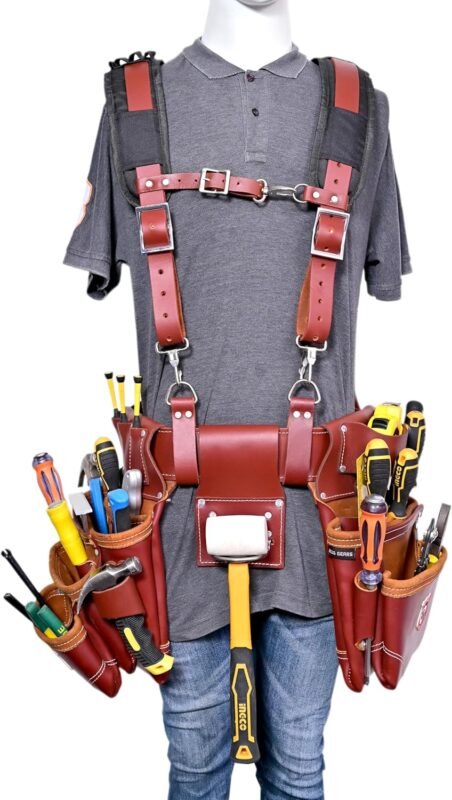
Framers carry the heaviest rigs in the trades, and their setups are built for speed and abuse. The hammer — often a long-handled framing hammer — rides on the dominant side in a sturdy loop. Big fastener pouches sit on both hips because a framer burns through nails and spikes faster than anyone: gun nails on one side, hand-drive and hardware on the other. Tape, speed square and chalk line live up front where they are grabbed hundreds of times a day. Because the load is heavy, many framers pair a wide belt with suspenders to move weight onto the shoulders; a well-built leather tool belt with padded support makes the difference between a belt that lasts the week and one that wrecks your back by Wednesday.
Fine-Tuning: Small Changes That Pay Off
- Weigh your rig. If your belt tops 15 pounds for finish work, something in it is not earning its place.
- Stage by task, not by habit. Hanging doors? Swap the framing load for your trim kit the night before, not at the truck.
- Protect the leather. A quick wipe-down and occasional conditioning keeps pouches from stiffening, which keeps tools sliding in and out easily.
- Retire mystery pockets. If a pocket has held the same three bent screws for a month, dump it. Dead weight hides in forgotten pockets.
Build Your Setup on a Belt That Lasts
The best layout in the world cannot fix a belt that stretches, tears or digs in by lunch. Rig Gears belts and pouches are handmade from full-grain, oil-tanned leather that breaks in to your body and your setup — the longer you run it, the better it fits the way you work. Browse the full range in our shop, compare single and double pouch layouts, and put together a rig that works the way you do.